At Autism Made Simple, we believe every child deserves the opportunity to develop meaningful skills that support greater independence, confidence, and participation in everyday life.
Our ABA Physical & Functional Development Program is designed to help children with autism and developmental differences strengthen practical abilities through individualized Applied Behaviour Analysis (ABA) strategies.
Using structured teaching, play-based learning, positive reinforcement, and hands-on activities, we help children develop essential functional skills at their own pace in a supportive, encouraging environment.
Our goal is to make everyday activities easier, more manageable, and more rewarding for children and their families.
ABA Physical & Functional Development focuses on teaching practical skills that children use throughout their daily routines.
Rather than focusing only on completing individual activities, our approach emphasizes developing independence, increasing participation, and helping children apply their learned skills across different environments.
Each program is individualized according to the child’s current abilities, developmental needs, learning style, and family priorities.
Fine motor skills play an important role in everyday activities, from holding objects to completing school-related tasks.
Our ABA-based learning activities may include:
Grasping and manipulating everyday objects
Using pencils, crayons, and learning materials
Completing puzzles and building activities
Practising buttons, zippers, and other clothing fasteners
Developing hand coordination through play
Increasing independence with age-appropriate tasks
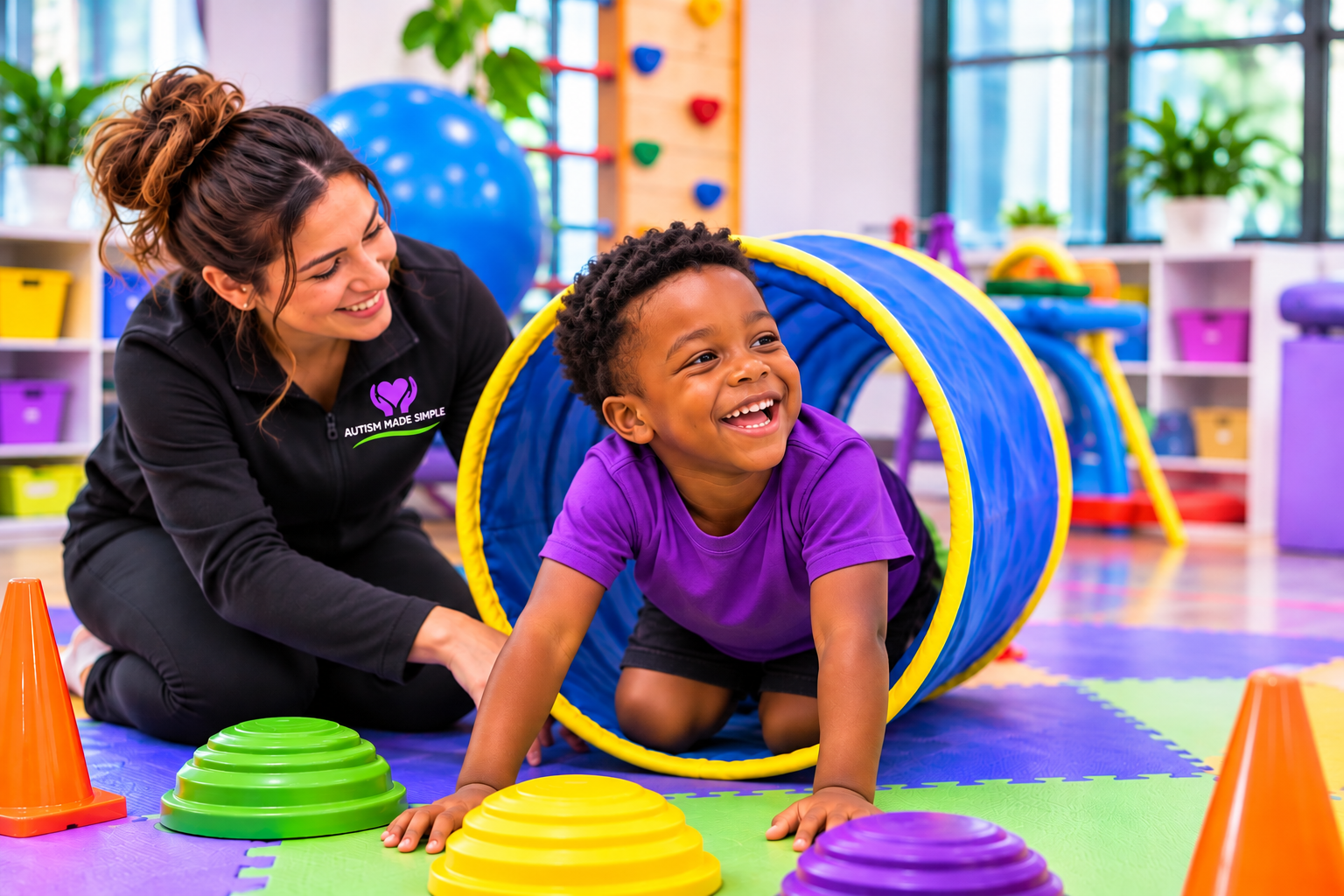
Movement-based learning provides opportunities for children to practise following instructions, coordinating actions, and participating in physical activities.
Our programs may incorporate:
Motor imitation and following movement instructions
Balance and body-awareness activities
Participating in obstacle courses and movement games
Practising coordinated movements during play
Following multi-step physical activity routines
Building confidence in structured movement activities
Activities are adapted to each child’s abilities and comfort level.
Developing independence with everyday routines can make a meaningful difference in a child’s life.
We provide individualized ABA-based instruction to support:
Dressing and undressing
Handwashing and personal hygiene
Toileting routines
Eating and mealtime routines
Organizing personal belongings
Completing age-appropriate daily responsibilities
Following morning, school, and bedtime routines
Skills are broken into manageable steps, allowing children to learn progressively and experience success.
Functional skills help children participate more independently at home, at school, and in their communities.
Our programs focus on:
Following visual schedules and daily routines
Completing tasks with increasing independence
Transitioning between activities
Understanding and following multi-step instructions
Organizing and putting away materials
Developing practical problem-solving skills
Requesting assistance when needed
Building confidence with new responsibilities
We emphasize skills that are meaningful and useful in each child’s everyday life.
Play provides valuable opportunities for children to practise new skills in an enjoyable and engaging way.
Our team uses individualized activities to encourage:
Imitating simple actions and movements
Participating in interactive games
Following actions demonstrated by others
Taking turns during play
Exploring age-appropriate toys and materials
Developing independence in structured and natural play activities
Through positive reinforcement and supportive teaching, children are encouraged to participate, explore, and develop new abilities.
Some children benefit from environmental adjustments and individualized supports that make everyday learning activities more comfortable and accessible.
Depending on each child’s needs, our team may incorporate:
Planned movement breaks
Visual supports and predictable routines
Adjustments to the learning environment
Gradual introduction to unfamiliar activities
Choice-making opportunities
Individualized strategies to support participation and engagement
Our focus is on helping children participate successfully while respecting their individual needs and preferences.
At Autism Made Simple, we understand that no two children learn in exactly the same way.
Our programs are developed around each child’s strengths, current abilities, and meaningful developmental goals.
We begin by learning about your child’s abilities, everyday challenges, interests, and family priorities.
Our team identifies practical, measurable learning goals that support functional independence and everyday participation.
We use evidence-based ABA teaching strategies, including task analysis, prompting, modelling, positive reinforcement, and systematic skill development.
We monitor learning and skill development to help determine when teaching strategies or goals should be adjusted.
We encourage families to practise meaningful skills across home, school, and community environments to support generalization and long-term independence.
Our ABA Physical & Functional Development Program may benefit children who:
Need additional support developing everyday living skills
Experience difficulty completing self-care routines independently
Are learning to follow instructions and participate in activities
Benefit from structured teaching of functional tasks
Need support with motor imitation and activity participation
Are developing independence with dressing, hygiene, or toileting
Benefit from individualized routines and visual supports
Each child’s program is tailored to their individual learning needs rather than a one-size-fits-all approach.
Individualized ABA-Based Programs
Every child’s learning goals are developed according to their needs, strengths, and priorities.
BCBA-Supervised Services
Our ABA services are supported by clinical supervision to promote consistent, evidence-informed teaching practices.
Practical, Everyday Learning
We prioritize meaningful skills that help children become more independent in daily life.
Supportive & Encouraging Environment
Children learn through engaging activities, structured instruction, and positive reinforcement.
Family-Centred Approach
We value family involvement and encourage collaboration to support children’s progress across environments.
Multiple Developmental Services Under One Roof
Families can access ABA-based communication and language development, functional development, academic support, social skills, school readiness, and other individualized programs.
Every new skill is an opportunity for greater confidence, independence, and participation.
At Autism Made Simple, we are committed to helping children develop meaningful abilities through compassionate, individualized ABA-based learning.
Whether your child is working toward greater independence with self-care, daily routines, movement activities, or practical life skills, our team is here to support their journey.
