ABA Communication and Language Development
At Autism Made Simple, we believe every child deserves the opportunity to communicate, connect, and express themselves with confidence.
Our ABA Communication & Language Development Program focuses on strengthening essential communication skills through individualized, evidence-based teaching strategies tailored to each child’s unique strengths, abilities, and developmental needs.
Whether a child is learning to express basic needs, develop language, improve social communication, or engage in meaningful conversations, our goal is to help them communicate more effectively, build positive relationships, and gain greater independence in everyday life.
We support verbal and nonverbal communication, recognizing that every child’s voice matters, regardless of how they communicate.
How We Support Your Child
At Autism Made Simple, our ABA Communication & Language Development Program helps children strengthen their ability to communicate, express their needs, understand others, and build meaningful social connections.
Through individualized, evidence-based ABA strategies, we support the development of essential communication skills, including:
-
Expressive Language: Helping children communicate their wants, needs, thoughts, and feelings using words, gestures, or other communication methods.
-
Receptive Language: Strengthening the ability to understand spoken language, follow instructions, and respond appropriately to questions.
-
Social Communication: Developing skills such as initiating interactions, taking turns, maintaining conversations, and communicating with peers.
-
Functional Communication: Teaching children effective ways to request help, make choices, express preferences, and communicate during everyday activities.
-
Early Language Development: Building foundational skills such as imitation, joint attention, responding to names, and early communication.
-
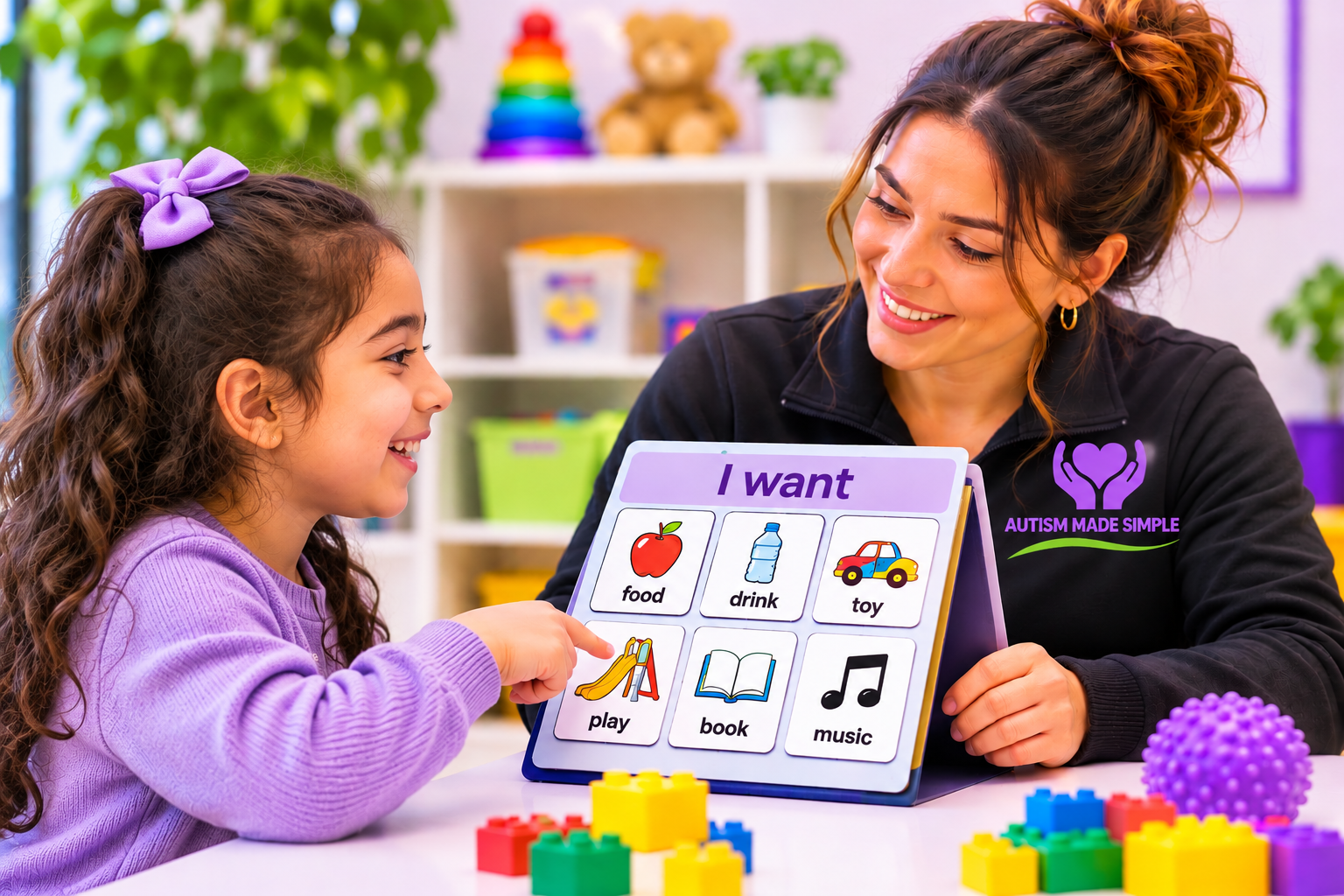
Augmentative and Alternative Communication (AAC): Supporting children in using picture-based communication systems, visual supports, and communication devices when appropriate.
-
Nonverbal Communication: Encouraging meaningful communication through gestures, facial expressions, body language, and other forms of expression.
-
Play-Based Communication: Developing communication, interaction, and social engagement through structured play and enjoyable activities.
-
Communication Independence: Helping children apply their developing communication skills confidently at home, school, and in the community.
Our goal is to help every child become a more confident, effective, and independent communicator, regardless of their current communication abilities.
